
When Eating Alone Became a Genre
How Korean dramas, webtoons, variety shows, and coin karaoke turned honbap into a culture of being alone in public.

Want the other half of the story?
This week’s essay and podcast cover the same territory from different angles. The essay follows honbap through Korean dramas, webtoons, variety shows, and coin karaoke booths: the cultural landscape. The podcast takes the bookish route, through two Korean books not yet available in English: the emotional close-up.
Together, they tell the fuller story.
The full essay is for paid subscribers, but the podcast is open to everyone.
Listen here: What Lunch Reveals When You Eat Alone
There is a book published in Korea whose title, translated fairly literally, reads: Prose for People Who Eat Lunch Alone.
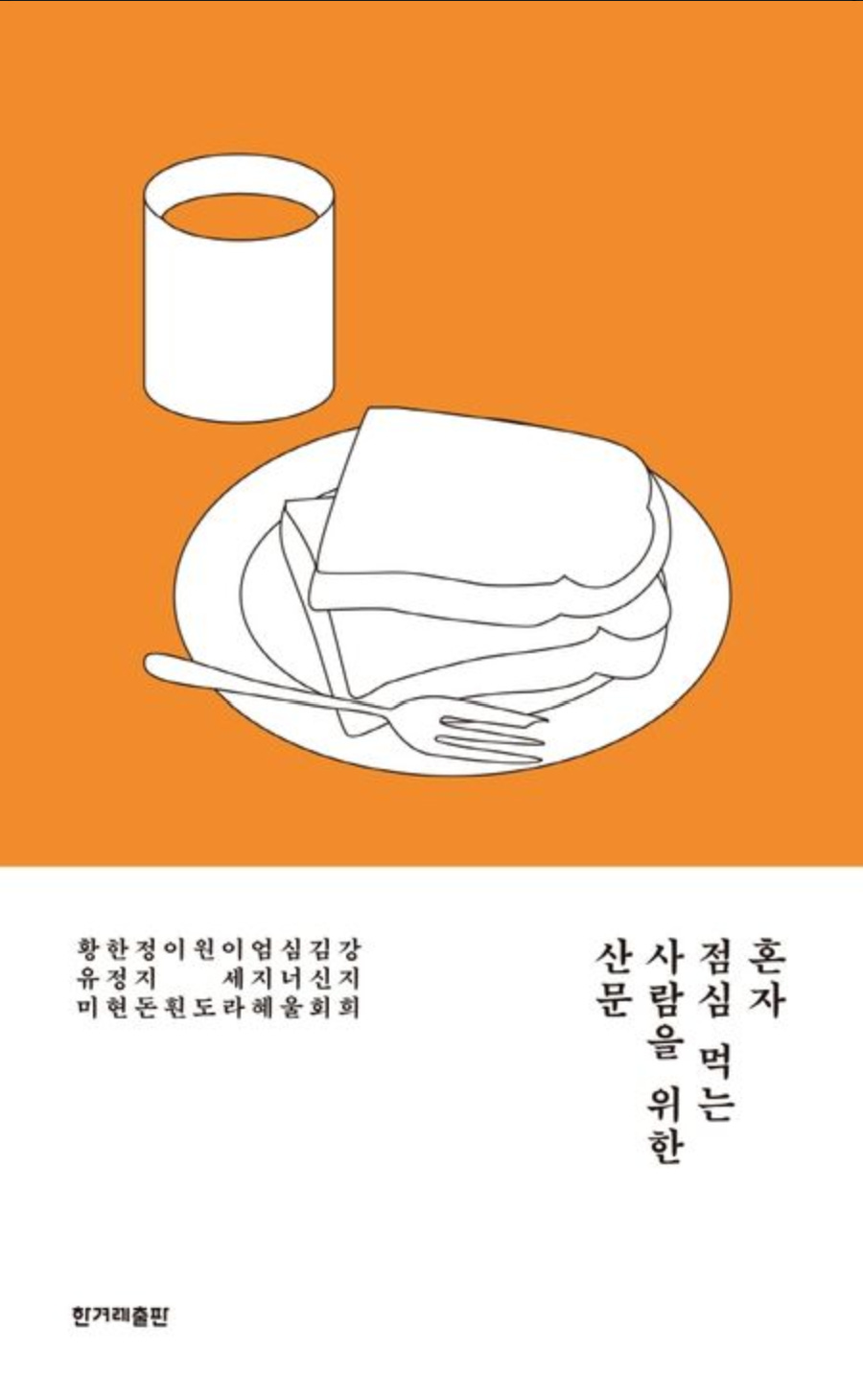
Not Essays About Lunch.
Not Meditations on Solitude.
Not even The Art of Eating Alone, which sounds like something with linen napkins, a ceramic bowl, and a suspiciously calm cover design.
No. This book is for people who eat lunch alone.
Specifically. Deliberately. Almost tenderly.
As though “people who eat lunch alone” were not just people caught between meetings, errands, deadlines, or mild social avoidance, but a recognizable public. A constituency. A readership. A group that might need to be addressed directly, acknowledged, and quietly accompanied between noon and one.
The book itself is a collection of short Korean essays built around lunch: for people serious about choosing the right lunch menu, for people who quietly eat lunch alone, and for people who use the lunch hour to do something other than simply refuel. It is not a manual. It is more like someone sitting down beside the solo diner and saying, I see you. Please continue eating.
The fact that such a book exists tells you something.
It tells you that eating alone in Korea had become more than a private habit. It had become a mood. A social fact. A literary address.
A quick note before we begin: once a month, I usually write a paid post devoted to a Korean book that has not yet been translated into English, a slower, closer read for subscribers who want more than a summary. This month, I’m doing something a little different. Instead of one deep dive, I’m holding two books more lightly and placing them alongside the dramas, webtoons, variety shows, and karaoke booths that surround them.
Think of it as a cultural ecosystem rather than a traditional close reading: two books as our doorway, and Korean popular culture as the room they open into. As always, thank you for being here.
Last week, I wrote about honbap (혼밥), eating alone in Korea, as a social phenomenon: why it emerged, why it can still feel complicated, and why one person at a table can carry far more emotional weight than the act itself seems to require.
This week, I want to follow the story forward.
Because somewhere in the early 2010s, Korean popular culture began doing something interesting. It looked at people eating alone in studio apartments, university cafeterias, exam-prep neighborhoods, convenience stores, office districts, and tiny rented rooms, and instead of treating them only as lonely or pitiable, it made them visible.
Then watchable.
Then relatable.
Then worthy of its own literature.
In Korea, eating alone was once treated almost like a social diagnosis. Then it became a survival skill. Then a lifestyle. Then a genre.
That shift is what we are here for today.
The Year Television Discovered the Solo Diner
The year 2013 is, I would argue, a symbolic turning point: a year when Korean pop culture began treating eating alone not merely as pitiable, but as interesting, watchable, and even pleasurable.
Two shows appeared that year and approached the subject from different angles.
tvN’s Let’s Eat (Siksya-reul hapsida, 식샤를 합시다, 2013) helped change the emotional lighting around solo meals. The drama was not simply about one man eating alone. It followed several one-person households whose lives intersected through food, appetite, loneliness, and the small dramas of living next door to other people.
But Goo Dae-young, one of its central characters, gave the show its most memorable food energy. He is a man with deep restaurant knowledge, strong opinions about how to eat well, and an almost evangelical ability to make an ordinary meal sound like an event.
A bowl of noodles was not just noodles.
A piece of grilled meat was not just protein.
A stew was not just dinner.
In Goo Dae-young’s mouth, food became argument, performance, expertise, and pleasure.
The drama did not treat eating alone simply as failure. It made appetite visible. It made the solo table look less pathetic and more alive.
Goo Dae-young explains to his bewildered neighbor why eating jokbal — braised pork trotters — alone is not sad. It’s optimal.
MBC’s I Live Alone (Na honja sanda, 나 혼자 산다, 2013) took a different angle entirely. A reality-variety show, it follows celebrities who live alone through their daily routines: their refrigerators, their morning rituals, their errands, their homes, their meals.
The structural irony here is worth pausing on: a show about solitary living, watched communally.
Footage of someone living or eating alone is screened for a studio panel, who laugh, comment, tease, sympathize, and occasionally get unexpectedly emotional together. Viewers at home watch the panel watch the celebrity live alone. Then everyone discusses it online.
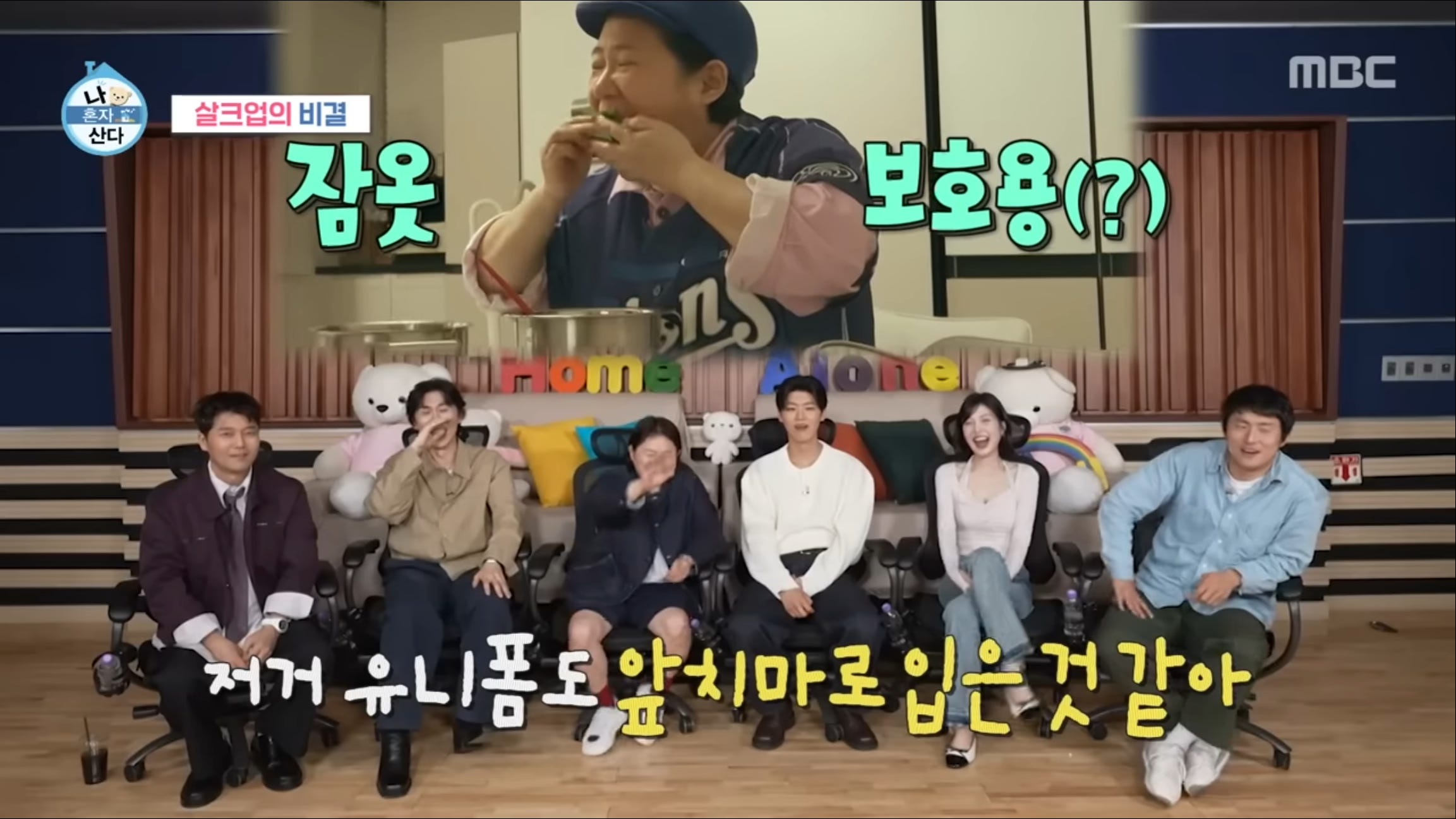
Only contemporary television could turn solitude into a group activity with reaction shots.
But that is exactly the point.
Korean pop culture did not leave aloneness alone. It turned aloneness into something warm, watchable, and collectively enjoyed.
It is also worth noting that the Japanese manga The Solitary Gourmet (Kodoku no Gurume, 孤独のグルメ) — first serialized in 1994, and adapted into a live-action drama series in 2012 — found a devoted audience across Asia, including Korea. Both the manga and the drama follow a businessman who eats alone after work, guided by appetite, inner monologue, and the simple joy of choosing what appeals to him. The fact that this quiet, minimalistic story of a man eating alone became a long-running franchise suggests that Korea was not alone in becoming fascinated by the pleasures of eating well, eating quietly, and eating without being bothered.
But the Korean case had its own emotional charge.
In a society where eating alone had often carried social pressure, the confident solitary eater could feel almost aspirational.
What these shows accomplished, together, was a quiet reclassification. Single-person households moved from being only a demographic statistic to being characters: people with routines, preferences, refrigerators, loneliness, appetite, and food opinions worth following.
Television made the solo diner visible.
But visibility is not the same as understanding.
To understand why honbap and honsul (혼술), drinking alone, began to matter so much in Korea, we need to move from the screen to the self.
That is where Kang Bora’s Please Let Me Be the One Who Makes It (Naman jal doege haejuseyo, 나만 잘되게 해주세요) becomes useful.
The Korean title resists clean translation. Literally, it means something closer to “Please let only me do well.” But the emotional register is harder to pin down: selfish, yes, but also tired, a little funny, and quietly desperate. It sounds less like “Let everyone else fail” and more like “Please, at least let me survive.”
Kang Bora, a cultural critic, uses this phrase as a lens on contemporary Korean life: the way individual desire has become more visible, more speakable, and also more fraught in a society still organized around collective expectations. In that context, honbap becomes one small expression of the friction. It is not necessarily a rejection of others. Sometimes it is a brief withdrawal from the exhausting work of adjusting yourself to them.
From here, we will trace how this solo figure moved across Korean pop culture: from honbap dramas to honsul, from webtoons about one-person life to coin karaoke booths, and finally toward next week’s strange table: mukbang.
Because Korea did not simply become more individualistic.
It built a whole culture of being alone in public.
Keep reading with a 7-day free trial
Subscribe to Understanding Korea, One Story at a Time to keep reading this post and get 7 days of free access to the full post archives.