
44. On Despair, Care, and Finding Breath Again
A letter on the stubborn hope found in the zigzag of history.

Before we begin, a quick note: are any of you looking for materials to teach kids about Lunar New Year on February 17? I’m sharing a page where I uploaded the slides and handouts I made last year. It’s from last year, but there should still be plenty you can use. Feel free to download the PowerPoint and copy or adapt whatever parts you need!
Here’s the audio version for this week’s post.
This week’s essay is basically a personal letter to you, and the episode is built from the same heart and story, so they’ll feel very similar. If you’d rather listen than read, think of this as the more relaxed, voice-memo version.
Hello, friends.
Today I want to start with a more personal hello, the kind you might write when you’re not sure you’re ready to “perform” coherence yet.
Because I’m usually the one sending messages out, I sometimes find myself wondering about the people on the other side of the screen.
Some of you are real-life friends. Some of you I met through Substack, and now I also read your newsletters. Some of you found me through Threads, or Bluesky, or LinkedIn, because you saw me share something and clicked. And then there are those I don’t know at all, readers somewhere in the world who, for some reason, care enough to read stories about this small peninsula halfway across the globe.
I think often about that. About the kind of person who’s curious about another country’s joys and griefs. I imagine they must be, at their core, deeply good-hearted.
So truly, thank you.
That’s part of why this newsletter has been harder to write than usual. If you follow me elsewhere, you might have noticed I’ve been quieter. It wasn’t strategy. It was a kind of fatigue that sounded like, “What is the point?”
The Anxiety in the Air
At the start of this year, my daughter got sick, and I began writing about Korean care. About the small home remedies, the rituals, the words we say while rubbing a child’s stomach. I actually built a full five-week outline for the series.
But over the last two weeks, as I tried to write those posts, I kept getting stuck.
For those who don’t know me: I live in Kenmore, Washington, about 20–40 minutes northeast of downtown Seattle (an hour on a bad traffic day). I’ve been in the U.S. for 23 years, moving through New York, New Jersey, Philadelphia, Irvine (CA), and Chicago, before finally landing here nine years ago. This neighborhood has more immigrants than any place I’ve ever lived.
No one around here has seen ICE agents on our streets. But people talk about nearby detentions and raids in the towns where we shop for groceries, twenty minutes away.
My daughter rides the school bus with kids whose parents are on H-1B work visas, green cards, or recently naturalized like me. At our stop, almost everyone speaks English with an accent. Many of us are BIPOC. Sometimes we ask each other, half-joking and half-serious, “Do we need to carry our passports now? What if we lose them?”
About two weeks ago, I received an email from my daughter’s school principal. Someone had called 911 and blown the whistle, reporting that ICE was at the school. When law enforcement arrived, they found neither the whistleblower nor ICE, but the damage was done. The air is thick with anxiety for both parents and children.
And then there are the stories that make you feel something darker than anxiety, something like moral nausea. In late January, as Epstein-related materials were released and debated, survivors and advocates criticized how some disclosures risked exposing victim-identifying information, while accountability for powerful people still feels distant.
But the hardest part is being a mother.
My daughter is only seven. How do I explain what is happening on the very ground she stands on? I don’t want her to grow up afraid. I don’t want her to become cynical, the kind of person who shrugs and says, “That’s just how the world is.”
I want her to believe something else: that yes, there are cruel people, but there are also so many good people. That goodness is not rare. That it can be organized. That it can become protection. That we can change things.
If you have your own way of talking to the children in your life about all this, I’d genuinely love to hear it. Lately I’ve been asking myself, over and over, “How do we raise hope when everything feels impossible?”
And this is where the guilt creeps in.
I’ve been reading Kim Yun-young’s book A Poor City Dweller’s Seoul Walk (가난한 도시생활자의 서울 산책), and one passage grabbed me by the collar. She writes about the unsettling sweetness of living peacefully while someone else’s life is precarious, and how frightening it is to realize your calm may be standing on someone else’s sacrifice.
That is the knot I’ve been carrying.
I was drafting this series about Korean care, and part of me kept whispering, “What are you doing, writing about honey tea and home remedies, when people are being hunted, when the world feels like it’s cracking?”
So yes, my mind has been complicated lately.
I had an outline for Korean care. I was drafting. And then I stopped. I saved everything as drafts, and for days I couldn’t finish a single paragraph. I couldn’t write. I couldn’t record. I couldn’t do the work I normally love.
And then, out of nowhere, I thought: maybe I need to tell you about my panic attacks.
It might sound like a sharp turn. It isn’t. It’s connected to everything above.
Because my panic attacks did not arrive randomly. Looking back, I think they were my body’s response to a specific kind of despair. The kind you feel when you realize the world can be broken not only by villains, but by ordinary people cheering for the wrong things.
2008: When politics entered my bloodstream
In the summer of 2008, I was in Korea, teaching North Korean defectors at five different centers while gathering data for my doctoral dissertation, a participatory action research project on how media literacy could support their acculturation process.
That summer, Korea had a new president: Lee Myung-bak.
He was elected on a wave of economic promise, including the famous “747” pledge, framed like destiny: 7% growth, $40,000 per capita income, and becoming the world’s 7th-largest economy. And early in his term, the country erupted in massive candlelight protests, triggered by the government’s unfair U.S. beef import deal, but fueled by something larger: distrust, frustration, and the feeling that leaders weren’t listening.
I want to be clear: I wasn’t devastated simply because people around me had different political preferences from mine, or because I thought I was right and they were wrong about everything. Even then, I knew politics was messy. And now, after spending more time studying modern Korean history, especially through works like Yu Si-min’s My History of Contemporary Korea, I can understand a little better why some people became so fixated on “development” and “growth,” and why they were willing to justify almost anything in its name. Understanding, of course, is different from agreeing with them, or respecting their choices as adults.
What shattered me, specifically, was Lee Myung-bak himself. This is a man who was eventually sentenced to 17 years in prison, ordered to pay a fine of 13 billion won (about $10.9 million), and to forfeit another 5.78 billion won (about $4.6 million). The Supreme Court confirmed this verdict in October 2020, finding him guilty of embezzlement related to the DAS case and bribery involving Samsung’s litigation fees. He remained in prison until late 2022, when he was granted a special pardon by President Yoon Suk-yeol.
I wasn't shocked by his crimes years later. The red flags were already there before he was elected. Yet, so many people around me were still so enthusiastic about him. It felt like a collective choice to look away from character in exchange for the promise of wealth.
There is a dark irony in this when I look at my life in America now. For all its flaws, South Korea actually sends its former presidents to prison when they break the law. When Donald Trump was elected again in 2024 despite his own mounting legal battles, my friends in Korea were horrified. They told me: “A man who should be in jail is becoming president again. America is truly terrifying.” It makes me realize that while Korea has its problems, it has a certain stubborn way of demanding accountability that even older democracies seem to be losing.
Back in 2008, I couldn’t see that far ahead. I just felt the weight of it all. At the time, I was three years into my marriage. I called my husband in the U.S. and said something I can still hear in my own voice:
“I can’t have a child in this world. If I don’t see this world as worth living in, how could I bring a child into it? That would feel like a crime.”
My husband, who is gentle in a way I do not take for granted, listened. He respected my fear.
(And then, exactly ten years later, a completely unplanned daughter arrived. Watching him love her with his whole heart has made me understand, more deeply, what he gave me back then.)
I was so disillusioned by Korean politics and it was so painful to be in the same room as people who celebrated leaders I found incomprehensible. It was exhausting to have people insist that my way of seeing the world was wrong. Because of that, I did not return to Korea for eight years. Honestly, if it weren't for my daughter, I might still be staying away today.
After that summer, something in me soured. I started carrying a constant internal rage: How can the world be like this? How can a country be like this?
And then my body began to revolt.
At night, when I lay down to sleep, my chest would pound. My breath would shorten. I would feel like I couldn’t inhale enough air to stay alive. I would think, “I’m going to die.” Or, “I’m going to lose my mind.”
I didn’t even know the term “panic attack” yet. I just knew I was terrified of myself.
I started looking up psychiatric hospitals in Philadelphia.
And then another obstacle appeared, absurd and real at the same time: I didn’t want to explain what was happening in English. I could describe the symptoms, technically. But it didn’t feel like my language could hold the pain. It didn’t feel like I was telling the truth of my body.
I looked for a Korean-speaking psychiatrist near me. I couldn’t find one. I was in a doctoral program, overwhelmed, always running on deadlines. The idea of seeking help quietly slipped into the category of things I would do “later.”
2009: Grief, and the peak of panic
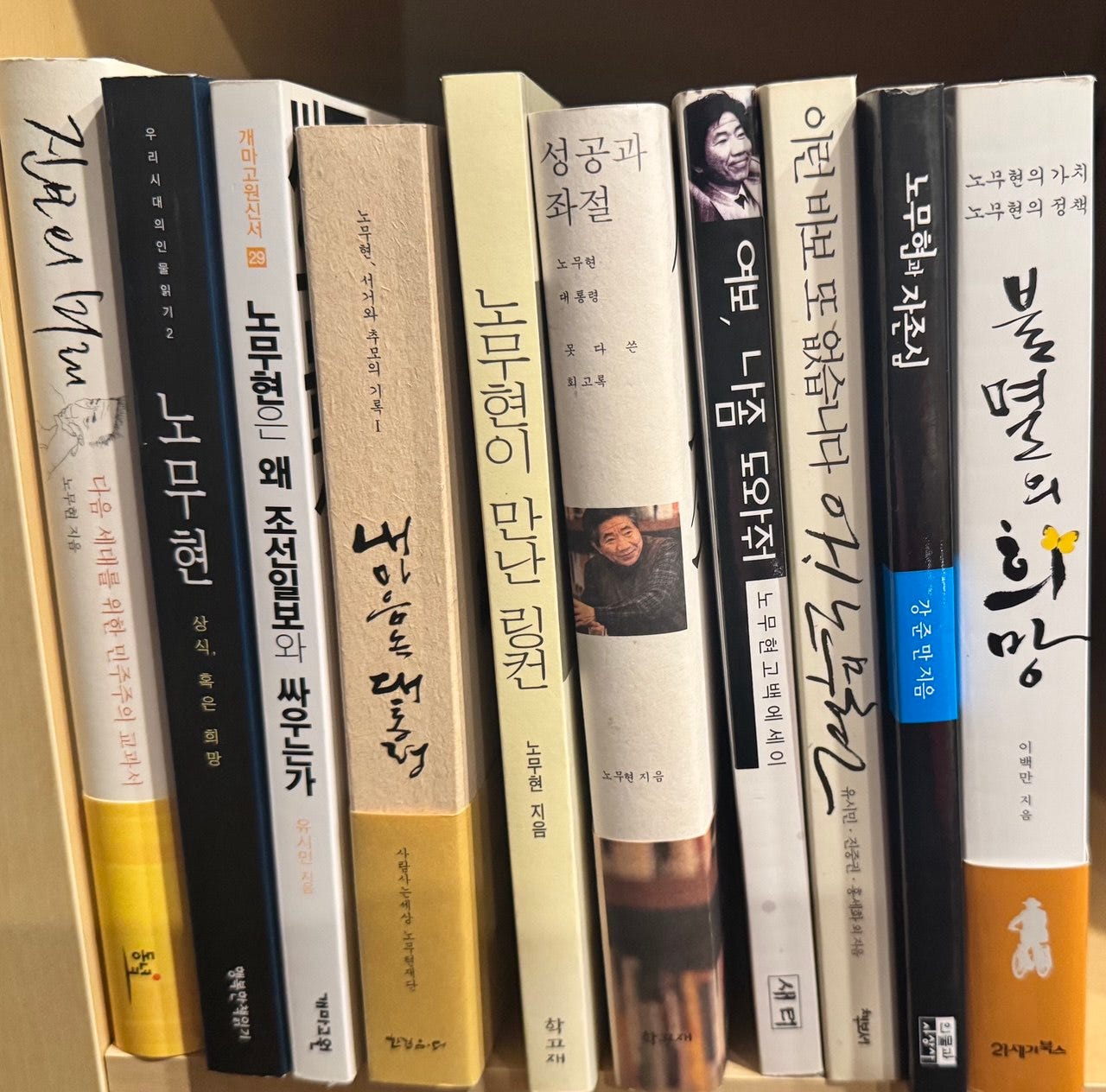
Before President Lee Myung-bak, Korea was led by President Roh Moo-hyun. I truly respected him, and I still believe he was one of the finest presidents Korea has ever had. But back then, it felt as though Korea was not yet a country deserving of such an extraordinary leader.
When he died in May 2009, after years of legal and media harassment by political opponents, my panic worsened. I would bolt out of the shower, gasping for air, convinced I would not survive. That period is hard to describe without sounding dramatic, so I will say it plainly: I had nights when I thought I would not survive my own nervous system.
What helped, and what a friend’s blog taught me
I read everything I could find about panic. Somewhere I read a line that felt almost insulting in its simplicity: sleep, food, and sunlight can help.
But I tried it anyway.
I forced myself to eat. But the truth is, back then I couldn’t swallow most of the food I could buy on campus. Even thinking about it made me gag. My body just refused.
So my husband started cooking. And somehow, the meals he made were the only things I could reliably keep down. I ate them, a lot. That was the moment he began cooking, and he never really stopped. Even now, he’s the one who runs our kitchen. Sometimes I joke that my husband’s cooking saved my life.
Sleep was hard then, too. But I started treating it like an emergency. Even if I had work due the next day, I went to bed anyway, thinking: I won’t die if I don’t finish this tonight. But if I don’t sleep, I might.
I went outside and let sunlight hit my face like medicine. I started meditating. To my surprise, they helped.
And then something else helped, unexpectedly.
One night, while searching the web, I stumbled onto a personal blog by the webtoon artist Jihyun Lee, who published under the pen name Yao.
At the time, her site was just her daily life, her comics, her thoughts. Nothing motivational. Nothing polished.
And yet it soothed me.
Not because it solved anything, but because it reminded me: a human being is still here, noticing the world, making meaning, telling the truth of her day.
I became her fan. I sent her work to friends. When I eventually went back to Korea, I reached out. We met. We became fast friends. And even though this newsletter goes out under my name, so much of what I write is shaped in conversation with Jihyun. I still run ideas by her, talk through drafts with her, and think alongside her as I try to make sense of the world.
We also realized we shared a particular vulnerability: we both absorb political chaos with our whole bodies. In my case, it became panic. In her case, she has fought cancer twice.
I won’t insult either of our lives by claiming simple causes. But I will say this: when the world turns cruel, some people feel it in their bones.
So we remind each other, still, to care for our bodies first, before trying to care for the world.
Jihyun’s old blog was eventually hacked and lost after she was attacked online for criticizing the conservative government. Her story is a reminder of how fragile truth-tellers can be, but it also taught me that one honest voice reaching another can be a lifeline through the darkness.
The strange, stubborn hope of democracy
There’s a line in Parker J. Palmer’s Healing the Heart of Democracy: The Courage to Create a Politics Worthy of the Human Spirit (2014) that I return to whenever I feel split by other people’s realities:
Our differences may be deep: what breaks my heart about America may make your heart sing, and vice versa. Protecting our right to disagree is one of democracy’s gifts, and converting this inevitable tension into creative energy is part of democracy’s genius.
That’s what I’m trying to believe right now.
Because even now, even in this atmosphere, I do see sparks of creative energy in the world. Not always loud. Sometimes local. Sometimes surprising.
Last week, for example, Democrats flipped Texas State Senate District 9 in a special election, in a district Donald Trump carried by about 17 points in 2024. Whatever your political analysis, results like that are at least a signal: people are paying attention, and people are pushing back.
And it reminds me of something I’ve been thinking about from Choi Tae-hyun’s book Democracy for Those Who Despair (절망하는 이들을 위한 민주주의). He argues, in essence, that democracy can feel like a tangle of contradictions not because we’re failing at being human, but because the world itself is complex, and we are tightly connected. Consequences ricochet. Good intentions collide with messy outcomes. Sometimes conflict produces unexpected cooperation, and sometimes cooperation ends in heartbreak.
That is true in Korea. Korea’s democratization did not move in a straight line. It moved like someone walking through a crowded alley: two steps forward, five steps back, then ten forward again, then suddenly a wall.
And it might be true here, too.
We might be living through a frightening backward lurch, and also the slow gathering of people trying to push the path forward again.
So here is what I want to say to you, and to myself
My panic has been resurfacing lately. It’s harder to sleep. The news cuts deeper than it used to. But writing this today reminds me: maybe someone else out there needs the gentlest reminder.
Eat something. Drink water. Step into sunlight. Move your body, even a little. If you can, talk to someone who can help. If you’re in panic, you’re not broken. Your nervous system is trying, clumsily, to keep you alive.
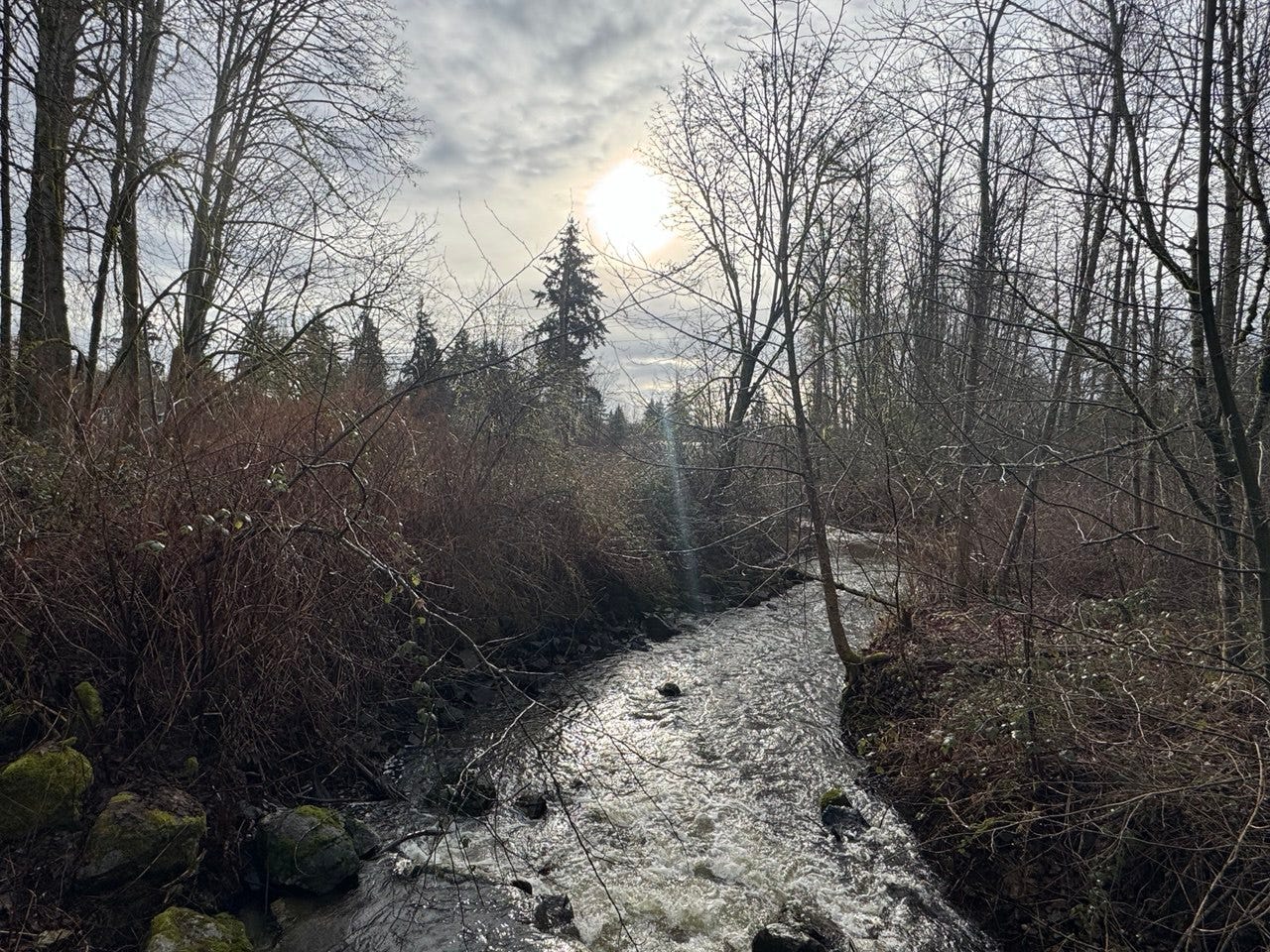
And when I’m ready, I’ll return to the topic of care in Korea. That might be next week, or it might be the week after. I have so much to share, and I still believe those stories matter. But if the world keeps pressing on my chest in a different way, I might write about that first.
Thank you for giving me the room to speak from the heart. It means so much to have a space where I can follow my own pace and share what truly matters to me in the moment, without feeling the need to rush. Thank you for letting me be a small presence in your inbox.
Wherever you are, I hope you’re finding your own ways to breathe again, to rest, and maybe, in small stubborn flashes, to hope.
With love,
Jiwon
Thank you for Your writing. I wish that we could jail the current leadership in the U.S.
This is not a great America. Here in the middle of Mississippi online is the only place to
hear a reasonable voice.
Yes, this. Political chaos finds its way into our bodies. I was just meditating on the resilience of my Korean ancestors. The ones written about in Han Kang’s novels. The ones who survived disasters, invasions, colonization and civil wars. The ones who made it through because they did one small life sustaining thing one step at a time. Thank you for this blog. Thank you for surviving. May we receive our ancestors’ blessings. 🙏